Back to homepage
News

Member in Focus:
Robert Harm

Fri 7th Aug 2026

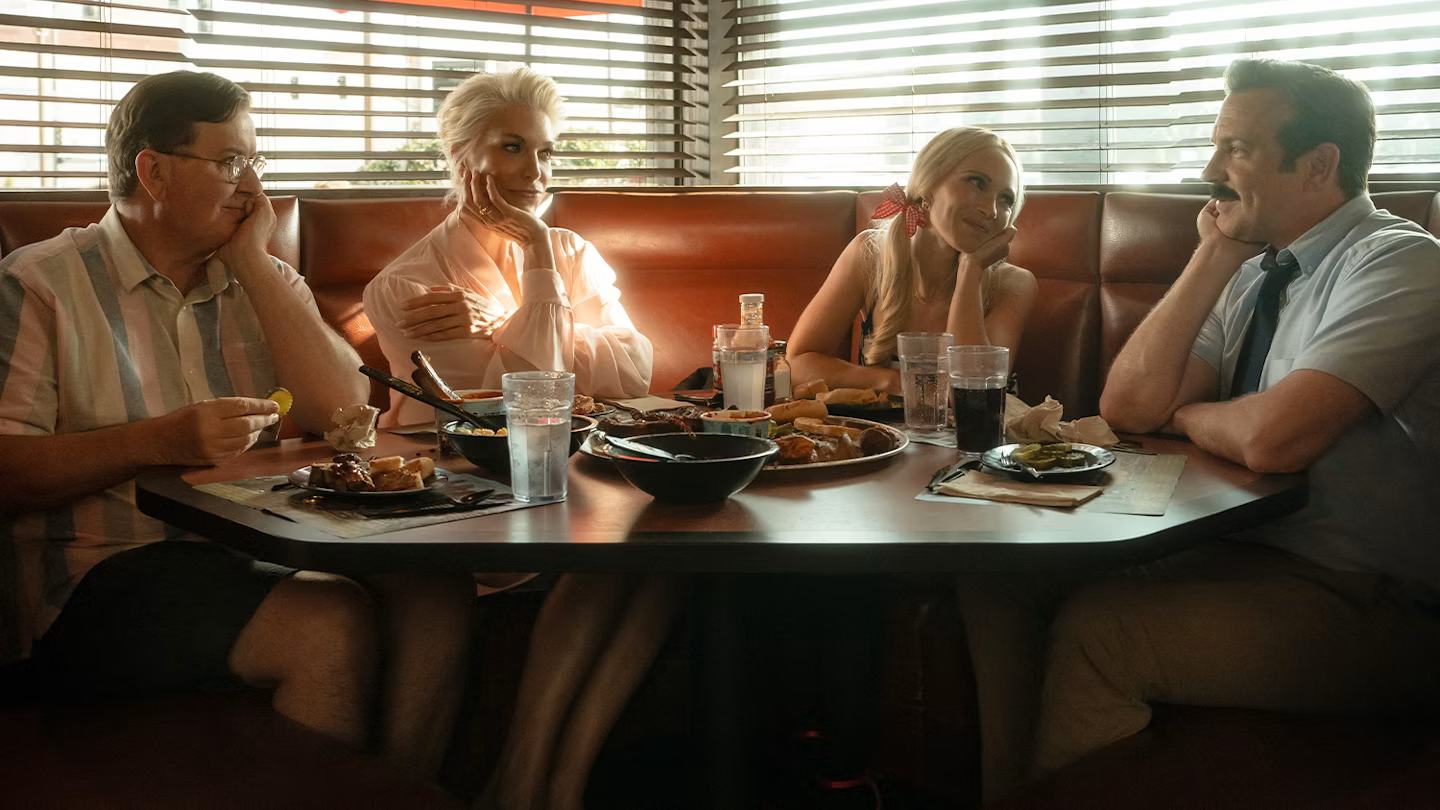
There are careers that tell a story — and Robert Harm's is a particularly good one. Starting out on bold, distinctive British independent films including Lady Macbeth and Rye Lane, Robert has built his way steadily and impressively through the ranks of production management — taking in Tuesday, Bridgerton and We Live in Time along the way — before stepping up to Unit Production Manager on productions including Deep Cover and Peaky Blinders: The Immortal Man. Now, with Ted Lasso Season 4 in production for Apple TV+ and The Roots Manoeuvre on the horizon, Robert is working at the very top of his field. We sat down with him to talk about the journey from low-budget British cinema to major studio television, what the UPM role really involves, and why the discipline of independent filmmaking never leaves you — however big the productions get.

Congratulations on the release of Ted Lasso Season 4, it’s one of the most anticipated returning series of the year — how does it feel to be part of bringing it back, and what drew you to the production?

It’s a privilege to be part of a production that means so much to so many people, but if I’m honest, it wasn’t the football that drew me to Ted Lasso, but the opportunity to reunite with Producer Andrew Warren. I was fortunate enough to work with him previously on Peaky Blinders: The Immortal Man, and he is someone I have a huge amount of respect for, so when he asked if I’d be interested in joining the team, it was an easy yes. 

Every production has its own personality and, while Ted Lasso has a distinctive warmth on screen, that collaborative spirit is something you can feel behind the camera too, and it didn’t take long to understand why so many people come back season after season. Being trusted to become a part of that team was both daunting and exciting.


Can you tell us how you first got started in the industry, and what path led you from Production Manager to Unit Production Manager?

Like many people in production, my career didn't follow a straight line, and I originally trained in Theatre Production Management. I’ve always enjoyed bringing lots of moving parts into one plan, and finding solutions, like putting a puzzle together. While theatre helped to nurture my skills, it was my first forays into film and working with Line Producer Ben Jacques that revealed the kind of challenges I found most rewarding, and led me to make the permanent transition into film & television. Ben continued to champion me throughout my early years in the industry, and it was his recommendation of me for Lady Macbeth that became a defining turning point, opening the door to opportunities that have shaped my career ever since. 

The move from Production Manager to Unit Production Manager wasn't something I planned against a particular timeline. It happened naturally as I gained experience across independent British features, major studio films and high-end television. Looking back, the responsibilities changed gradually, long before the title did. 

One person who recognised that progression early was Co-Producer Tim Dennison. He consistently encouraged me to take on greater responsibility, backed me to step outside my comfort zone, and trusted me with opportunities that helped shape me into the Unit Production Manager I am today. His trust and collaborative style have had a lasting influence on the way I approach both leadership and teamwork. 


Your credits as Production Manager include some genuinely distinctive films — Lady Macbeth, Rye Lane and Tuesday are all very different in tone and scale, but each is a bold, distinctive piece of British filmmaking. What do those earlier productions mean to you looking back, and how did they shape the way you approach your work today?

Independent filmmaking gave me the best possible grounding. It taught me to be resourceful, to communicate clearly, and to appreciate the value of every member of the crew. Those aren't skills you leave behind as the budgets grow; they become even more important.

On Lady Macbeth, what I remember most isn’t the budget or the long days, it’s the people. Fodhla Cronin O'Reilly and Pete Smyth created a collaborative environment where everyone felt trusted and valued, which made all the difference on a production where we were a very small crew, with everyone taking on responsibilities above and beyond their job titles. 

Rye Lane and Tuesday reinforced those same values, and emphasised that limitations often encourage innovation. When resources are tight, you become more thoughtful, collaborative, and creative in how you solve problems. Brilliant filmmaking isn't about having everything you need; it's about making the very best of what you have. For me, the key is understanding what the filmmakers are trying to achieve, putting the right people together and finding the best way to make it happen.


Rye Lane and Lady Macbeth are both low-budget British films that punched well above their weight creatively. How does the discipline of managing a tight budget on an independent production prepare you for the very different pressures of a major studio series like Ted Lasso or Bridgerton?

One of the biggest misconceptions I had, and I think many people moving from independent films to large studio productions share, is that bigger budgets somehow make the job easier. In reality, bigger budgets don't make the job easier, they simply make the decisions bigger.

Working on low-budget films with limited resources, you quickly learn to question every decision and ask, "Is there a better way of achieving this?" That's a mindset I've carried with me throughout my career. For me, questioning a plan has never been about finding reasons not to do something; it's about finding a better way of achieving the same creative outcome. Whether you're working on a £500,000 independent feature or a major studio television series, that mindset doesn't really change.

You served as Production Manager on Bridgerton Second Unit — a production of enormous scale and complexity. What did that experience teach you about working within a large studio environment, and how did it influence your progression to UPM?

Walking onto Bridgerton for the first time was genuinely eye-opening. The scale of the operation was unlike anything I'd experienced before - the Regency sets across the studio stages were incredible, and the size of the crew was immense. 

What surprised me most, though, was how familiar it all felt. The productions were bigger, the budgets were larger, and more people were involved, but fundamentally, I was still solving the same problems: bringing people together, balancing competing priorities, and helping every department achieve what it needed. That was quite a reassuring realisation.

Watching the Main Unit production office operate at that scale was an invaluable learning experience. Beyond the scale of the production itself, I had the opportunity to observe another Unit Production Manager and production office at work, constantly asking myself, What works well? What would I do differently? Just as importantly, the Main Unit team trusted me to run Second Unit in the way I felt was right. Rather than expecting me to mirror their approach, they gave me the space to develop my own, and that autonomy gave me a great deal of confidence.


We Live in Time, Deep Cover and Peaky Blinders: The Immortal Man represent a significant step up in scale and profile. How did your approach to production management evolve as you moved into these larger productions — and was there a moment when you felt you'd genuinely made the transition to a new level?

Looking back, I don't think my approach to production management fundamentally changed, but it did evolve as I became more confident applying the principles I'd developed on earlier productions to projects on a much larger scale.

We Live in Time was a particularly important production because it was when I really started to find my feet. We had a fantastic production office and accounts team, and it was one of those productions where everyone challenged and supported each other in equal measure. I found myself taking on more responsibility and becoming much more confident, trusting my own judgment.

Deep Cover built on that greatly, but Peaky Blinders: The Immortal Man was another significant step. The scale, budget and logistics were all on another level, with the production moving around England for much of the shoot. When you're moving hundreds of people around the country for weeks at a time, the logistics matter, but so do the people. Keeping departments informed, ensuring they feel supported, and maintaining a sense of shared purpose become just as important as solving the practical challenges. It reiterated to me that morale is just as important on a production of that scale as it is on an independent feature. The difference is that you must be much more deliberate about maintaining it. 


As a UPM, you sit at the very centre of a production's logistical and financial operation — managing budgets, schedules, crew and departments simultaneously. How do you describe what the job really involves to people outside the industry, and what do you wish more people understood about it?

When people ask me what a Unit Production Manager does, I usually describe it as putting the puzzle together. Every department arrives with a different piece of that puzzle. My role is understanding how those pieces fit together, helping departments understand each other's priorities and creating an environment where everyone has what they need to do their best work. 

From the outside, people often assume the job is all about budgets and schedules. Of course, they're a huge part of it, but they’re really just tools. The real job is understanding people, how departments work, where their priorities overlap and sometimes compete, and how to help everyone move towards the same goal. 

Perhaps the biggest misconception about production management is that its’s about telling people what they can’t do. I have never seen it that way. Our role is to understand what departments are trying to achieve and help find the safest, most practical and most responsible way of making it happen. Sometimes that means finding another solution, sometimes it means challenging an idea. 

It's a role that demands empathy, organisation and decisiveness. Every day you're balancing different personalities, different pressures and different priorities. If the crew feel supported, respected and trusted to do what they do best, the whole production benefits.


Ted Lasso has a famously warm and collaborative production culture — both on screen and behind the camera. How does that culture filter through to the production office, and does the tone of a show ever genuinely change the way the crew works together?

I don't think the tone of a show necessarily determines the culture behind the camera. I've worked on productions with incredibly dark subject matter that had the most supportive and enjoyable crews, and I've worked on lighter productions that presented very different challenges. For me, the culture of a production always comes back to its leadership and the people who create the working environment.

When people feel trusted, supported and informed, that attitude naturally spreads through the production. Departments communicate more openly, people are happier to help one another and everyone works towards the same goal. In my experience, that's what people remember long after a production has wrapped. I think Andrew, having now led three seasons of Ted Lasso, embodies that approach. He creates an environment where people feel trusted and supported, and that attitude naturally filters through the production.

More broadly, though, I think every production develops its own personality. Schedules, budgets and creative challenges all vary enormously, but the productions I've enjoyed most have always had one thing in common: people who respect one another, communicate openly and genuinely want the whole team to succeed.


On a lighter note — after productions spanning independent British cinema, period drama, major studio television and everything in between, what is your absolute non-negotiable on a long shoot day?

Apart from a decent cup of coffee, it's getting out from behind my desk and walking the floor. No matter how busy the day is, I always try to spend time talking to departments, checking in with people and getting a feel for how the production is really going. Those conversations often solve problems before they become problems, but they also build trust. If people know you'll listen, be honest with them, and follow through on what you say, it makes those more difficult conversations much easier when they do come along. 

They’re also normally the best moments of my day. You get to have a laugh with people, hear what's going on across the production and remind yourself that, despite all the schedules and spreadsheets, this is still a people business.

No matter how demanding the production becomes, I don't think you can lead a team from behind a computer screen. Getting out, talking to people and sharing a bit of humour along the way always makes for a better day and, in my experience, a better production too.


Finally, what advice would you give to a Production Manager who wants to make the step up to UPM — and what has kept you passionate about this work across such a varied and impressive career?

My biggest piece of advice would be not to rush it. Every production teaches you something different, and those experiences all add up. The more varied your experience, the stronger your foundation becomes, because every production, regardless of its size or budget, develops a different set of skills. 

Starting out on low-budget productions gave me an understanding of how every department functions and the nuances of how they fit together, knowledge that becomes much harder to gain once productions become larger and more specialised. It also taught me to be resourceful, to think creatively when resources were limited, and, perhaps most importantly, that everyone has something valuable to contribute. Every member of the crew brings different experiences and perspectives, and I've always believed there's something to learn from everyone, regardless of their role or level of experience. That's also why I believe diverse crews make stronger productions. Different backgrounds and ways of thinking challenge assumptions, encourage new ideas and ultimately help us tell better stories. 

The thing I still enjoy most about my job is that no two days are ever the same. I can arrive at the office with a clear plan for the day, but I never know what challenges are going to land on my desk, and that's what keeps the job exciting.