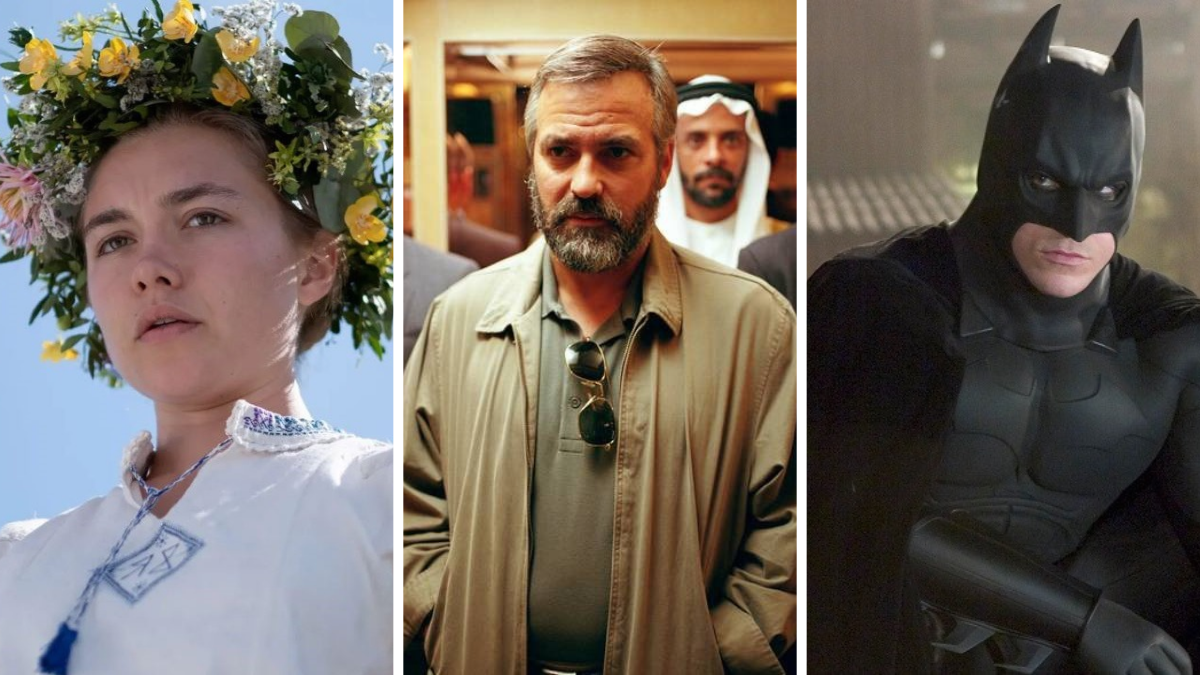
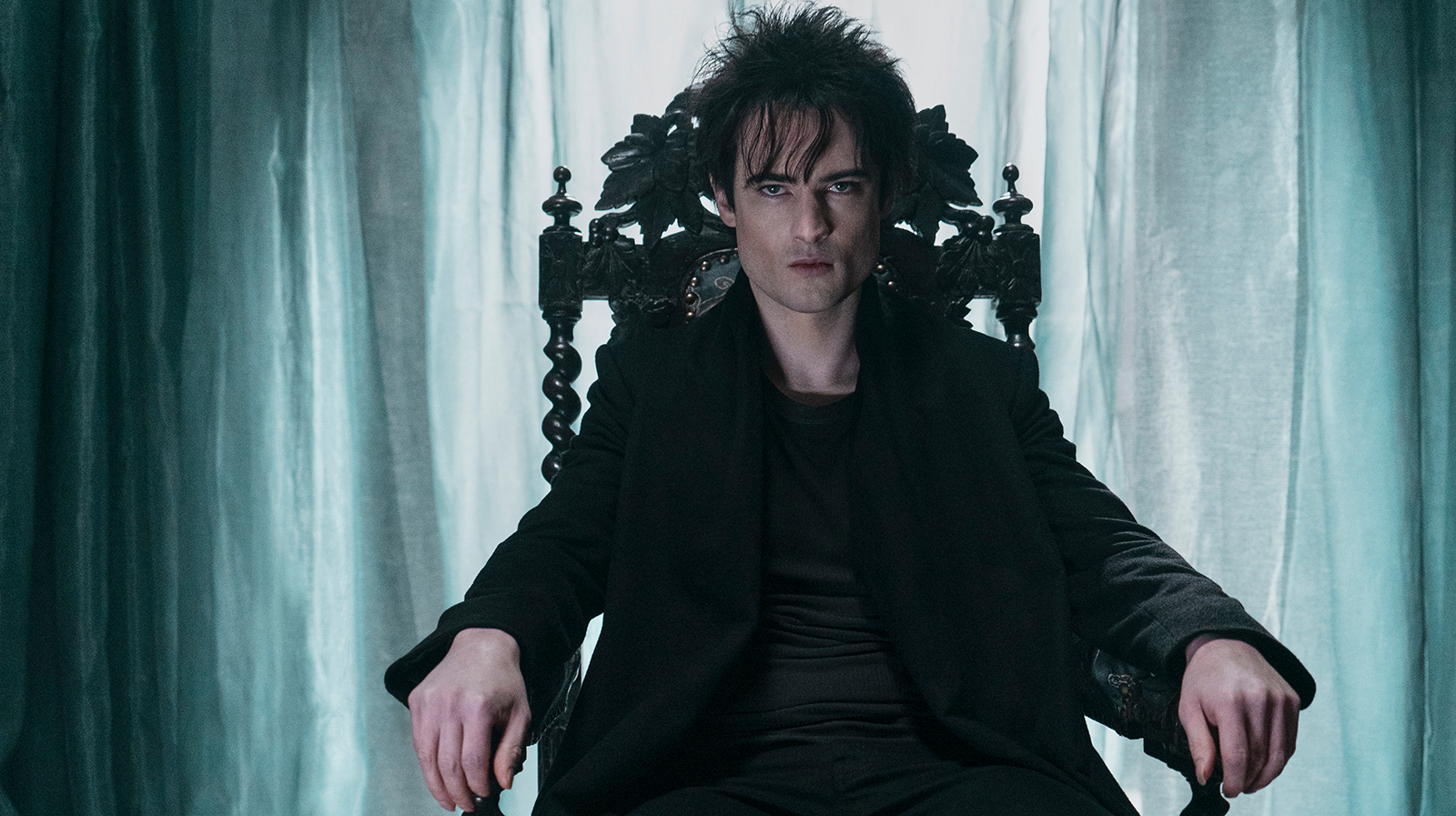
Very few careers in British production tell a story quite like Ben Rimmer's. Starting out as a Location Supervisor on productions including Batman Begins, Syriana and Spy Game, Ben has worked his way through almost every grade the industry has to offer - Production Manager, Line Producer, UPM, Co-Producer, Producer - before arriving at Executive Producer, the role he holds today on Wind of Change for Warner Bros. Along the way, his credits have taken in some of the most distinctive and celebrated productions of the last two decades: Midsommar for A24, Cuckoo for NEON, The Sandman for Netflix, Ten Percent for Bron Studios. It is a career defined by curiosity, adaptability and a genuine love for the craft — and one that has been supported, throughout, by an active and committed relationship with the Production Guild community. A regular at online sessions, networking events and training, Ben is this week's Member in Focus - and we sat down with him to talk about the journey, the community and everything in between.

You're currently working as Executive Producer on Wind of Change for Warner Bros. - can you tell us what drew you to this project, and what the EP role looks like on a production like this?
What drew me to this project was the scale of the script and the opportunity to work on a Warner Bros funded project at Leavesden. The Scorpions’ famous track ‘Wind of Change’ had become the anthem for the fall of the Berlin Wall in the 90s and I was thrilled to be part of sending that powerful unifying message to a new generation with this film. I received a call from US Producers Ali Afshar and Daniel Aspromonte saying they had a period rock biopic feature that was being greenlit 50/50 through Warner Bros in Burbank and Fox Entertainment, to be shot in the UK for a tight budget. I’d been recommended to them by Emily Stillman, who I’ve known for a long time, as a Producer who would find a way through to deliver the challenging ambition for the budget and ensure it ran smoothly. We were fortunate to base the production at Leavesden, where Emily and her team facilitated an incredible level of support, which the budget could not otherwise have hoped to afford.
As EP I took responsibility for the legal and financial set up, ensuring everyone’s welfare, whilst keeping a constant eye on the detail and planning as many steps ahead as possible. With the support of the hard working Production, Accounts and Location teams, and later from every department, whose perseverance, good humour and dedication were tremendous, the only way I saw to approach this film was the proverbial journey of a thousand miles, one step at a time, in the firm belief that where there is a will, there is a way. Prep was short so communication was key, which allowed swift and proactive management at every turn from the Director, Producers and HODs.
My producing colleagues had not shot in the UK before, so as EP I guided them through the appointment of Tax Credit Advisors and Legals, and setting up the SPV, Bank Account and payroll. The challenge with this project was a continual juggling on every level. The ambition was huge, which was very exciting but took constant negotiation and willingness from everyone who took part and delivered it. Crew are the backbone of any production and we could not have been more fortunate with the excellent team we assembled, so a huge thanks to them all and to the superb teams at Leavesden and De Lane Lea, whose Post Sound and Dailies work was first class.
Your career began in locations - with credits including Batman Begins, Syriana, Spy Game and Watchmen - before moving into production management and eventually producing. That's a genuinely unusual arc. What prompted the move out of locations, and how has that foundation shaped the way you produce?
I loved scouting, travelling and negotiating to make the seemingly impossible, possible. That’s where the magic was for me. I’d started in commercials and learnt the visual language by working with exacting Directors. After 15 years, I had worked on several major scale movies in the UK and across the world as a Location Supervisor. I was 39 and had achieved everything I’d wanted to in that role and was ready to take on more responsibility.
On an early recce with the Thames River Police, the UK Producer of The Flood, a large TV show, asked if I could recommend a good PM. I said, “You’re looking at him!”. I got the job, proving to myself that you must put yourself forward when the opportunity arises. I was a PM for four years then 1st AD Chris Carreras, who I’d worked with on Green Zone, put me forward for Line Producing ‘First Light’ for BBC2, a WW2 film about 18 year old Geoffrey Wellum, the youngest Spitfire pilot in the RAF. I accepted and got it back on track financially and logistically. It was well received and highly enjoyable to make. I understood the mechanics of the film making process from being a Runner, PA, Location Scout, Location Supervisor and PM. This foundation gave me the overview and insight into every department’s needs. As a Producer I am aware, from experience, of the different pressures departments come under and with that insight, I can respond appropriately and with understanding.
You've worked your way through almost every grade in the production hierarchy - Location Supervisor, Production Manager, Line Producer, UPM, Co-Producer, Producer, Executive Producer. Was that a deliberate climb, or did it evolve more organically? And what did each step teach you that the next one needed?
I’ve always had the ambition to keep expanding and ultimately to produce works that entertain and move audiences and take them on a journey, in the same powerful way that I experienced at the cinema as a boy. So I was driven upwards through Locations and across into Production.
Location Supervising taught me the visual language, diplomacy, how to look after every department and what their needs were. It taught me how to negotiate, how to write and keep to a realistic budget and to speak up when that became an issue. Also how to look after a department and to keep the Production, Accounts and HODs closely informed of changes – it’s a team effort first and foremost. When I became a PM, I kept the Line Producer informed throughout each day and the Production Accountant. When I became a UPM then Line Producer the expansion was much greater, with greater responsibilities to Studios, financiers and Bond companies. The ultimate responsibility for those relationships is with the role of Producer and Executive Producer. Each step of the way has taught me to be fearless when confronted with any situation, as there’s nothing that can’t be solved or resolved. If I don’t understand jargon, I slow it down until I can. I don’t pretend that I know. The solution is then often simpler than at first appears. As Damian Anderson put it so well last week, you have to zoom out from micro management to embrace macro management.

Midsommar for A24 and Cuckoo for NEON are two of the most distinctive and tonally bold films in recent British independent filmmaking. What does it take to produce a film with that kind of singular creative vision, and how do you support a filmmaker's ambition while keeping the production on track?
You have to recognise and embrace the importance of the Director’s vision. I experienced the singularity of vision from working with directing giants such as Tony Scott on Spy Game, Chris Nolan on Batman Begins and Paul Greengrass on Green Zone and Watchmen. I learnt how to help realise their creative vision and how to deliver it within the constraints of budget and schedule. Delivering on both is the role: it’s creative and logistical.
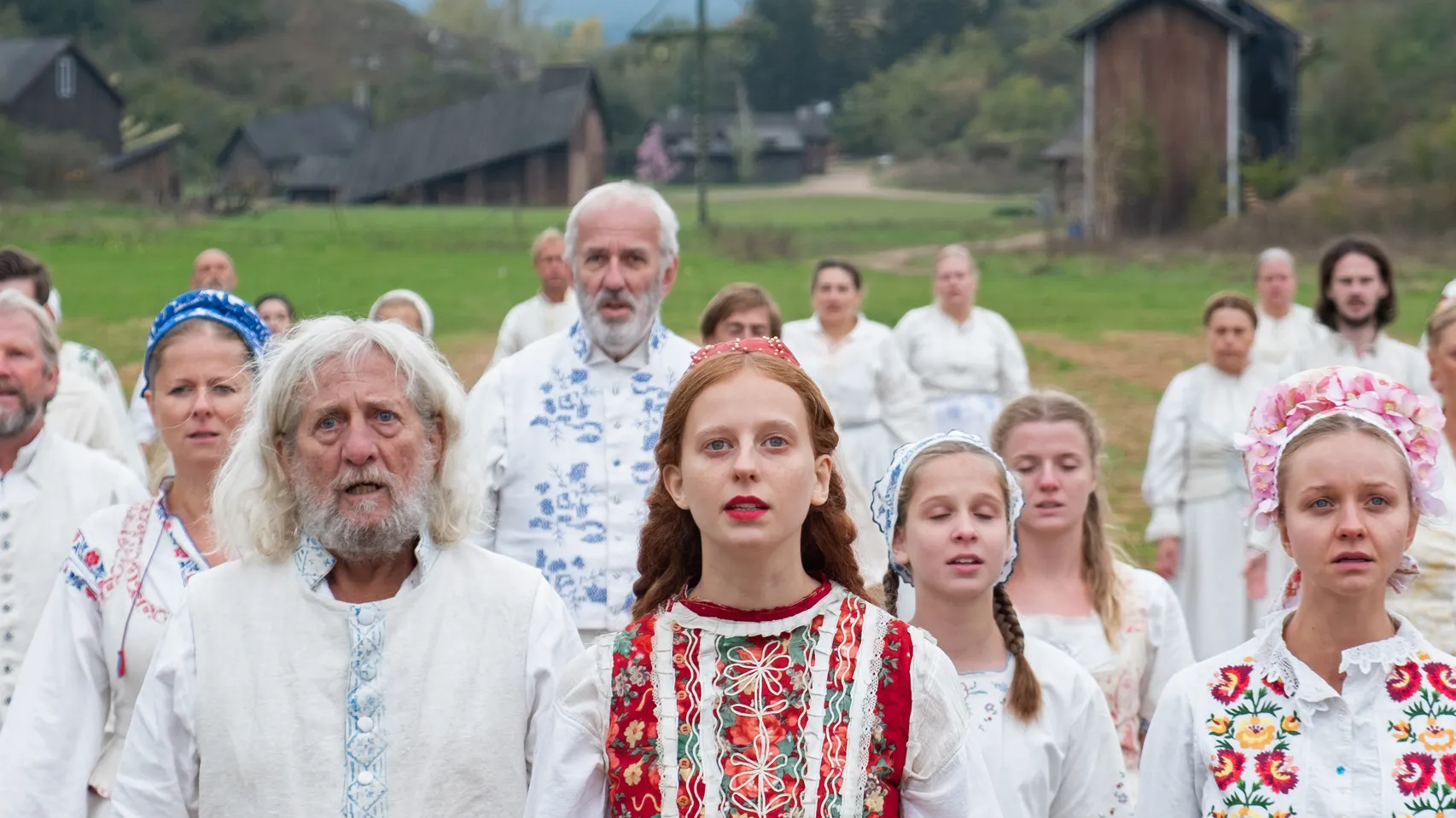
On Midsommar, I was shown an amazing 250 page creative document detailing every visual aspect of the film, which had been put together over two years. Ari Aster knew his audience would replay scenes to check the details. Each time the village assembled we had to have all 110 villagers present. We never cheated that on the wide shots. The costume team painted rune signs on every shoe, which Ari was able to use in close ups. The issue of over exposure on their white costumes in the harsh summer sunshine was mitigated by detuning the lenses from Panavision to allow the textures to be seen clearly. Every shot was choreographed by Ari and DOP Pawel Pogorzelski in exacting diagrammatic detail resembling a dance step, on a flip chart during prep. We needed the best cameras possible but lacked the budget, so I flew back to see Hugh Whittaker in Panavision and put our case to him. He wholeheartedly embraced the film and supplied us with the highly sought after DXL2s that could capture the detail required. You learn that not everything is about money. A singular creative vision can be very persuasive in enlisting help for the film.
Cuckoo was a creation by Director Tilman Singer, who had made one film before. NEON were a marvellous studio to work with and they gave him great freedom whilst keeping the film aligned to their creative ethos. US Producer Josh Rosenbaum of Waypoint Entertainment was terrific. He mainly concentrated on looking after Tilman and the Cast, whilst I ensured that what Tilman requested was achievable and focussed on delivering that. It helped to have a very willing and capable German crew, whose general good nature kept the energy positive throughout, despite the continual disruption caused by Covid. Keeping spirits up is essential, so it’s necessary to give your best game every day.
You've also worked extensively in long-form HETV - The Sandman, Ten Percent, Mr Selfridge, The Brave. How does your approach to producing shift between features and series television? And which format do you find most creatively rewarding?
I love producing long form HETV. It’s a different mindset. The management and the reporting is different to features, as is the structure and the overall premise. Shooting for six and a half months was an education the first time I Co-produced Mr Selfridge but it was highly enjoyable. On Emerald City we shot for 167 days across three countries. Shooting ten episodes requires stamina, measure and self regulation. I enjoy the variety of working with multiple Directors, having one or two in Post, one shooting and one or two more in varying stages of Prep - there’s rarely a dull moment! As a Series Producer it involves working more closely with writers and directors, which fulfils the creative element I’ve missed so much since scouting locations.
I’ve worked on several HETV series for the best part of a year on each, and they are more of a marathon, not a sprint. The PACT / BECTU TV Agreement is a welcome bedrock on which to plan and run a series on any budget level. It makes the comparative no man’s land of features below £30m seem more difficult to navigate for both Producers and Crew. The process of financing is different: HETV gets commissioned before it goes into production and usually has an air date to work to, whereas films, especially those below £30M, tend to begin whilst financial closing is still taking place and can therefore feel more tenuous prior to a greenlight. The advent of the UK tax credit for HETV shows has been a blessing.
HETV and Film are both creatively rewarding in different ways. I enjoy them equally.

You're a very active member of the Production Guild - regularly attending online sessions, networking events and training. What value do you find in continuing to engage so actively with the community, even at Executive Producer level?
As many have astutely observed, this year is about building our community. It’s easy to believe at times that one is out there on one’s own, in the freelance world we inhabit. Reconnecting with the PG community even for a lunchtime masterclass or discussion topic reminds me of what I’m proud to be a part of and of the common values we collectively uphold. It’s gratifying to be in the company of like-minded souls in this industry who share a dedication to what they do and have a love for it. The knowledge from the training sessions is always incredibly useful to receive and share.
You've spoken about the importance of continuing to learn and develop professionally throughout a career. What does that look like for you in practice - what are you still curious about, and what have you learned recently that surprised you?
My nature is expansive so to me, unless I expand, I remain limited. There is so much to learn and keep across with the continual changing landscape of new technologies in film and TV production, such as the increasing use of AI in VFX, which helped us out on Wind of Change’ for the huge stadium crowd scenes. I am exploring how to bring some stability into the funding process and widen the conservative funding lens that can seem to keep restricting. We must continue to be the finest financial practitioners, especially with such fierce global competition. The Treasury discovered for every £1 spent by Film and TV production in the UK, about £3 goes back into the economy. That’s great business! Yet UK Indie films are 64% down in production on 12 months ago, according to the BFI, and despite one of the most attractive tax breaks in the world, the UK is not attracting enough business. We need more governmental support and I’m very interested in pursuing that to establish a bedrock for future filmmakers to tell their stories and remove some of the intense uncertainty and risk that always surrounds the process.
When speaking about your training experience, you said that 'it’s so good to give back' - where does that instinct come from?
I’ve now given two full training days for Amazon MGM and Film London. The instinct comes from the knowledge that it’s more fulfilling in life to give than just to receive. It’s reciprocal. I’m grateful for everything I was taught by many mentors – both on the directing side – Tony Scott, Chris Nolan, Paul Greengrass, and on the producing side - Iain Smith, Steve Clark-Hall, Mairi Bett, Jo Burn, Sarah Curtis, the wonderful, late Chris Thompson, Marigo Kehoe, Bill Shephard, Brian Donovan and countless others. The passing on of their knowledge and experience, together with my own lessons learnt in each role, made it remarkable to discover what knowledge I’ve gathered over the years and operate from. This imparting happens naturally enough in the workplace but to impart it for a whole training day to a new cohort, was excellent and very self informative.
You offer production service company facilities for incoming international productions to the UK and have significant experience with the BFI application process for qualifying projects. How important is that kind of specialist knowledge in the current production landscape - and is it something more producers should be building?
The UK needs to remain at the forefront of choice at every budget level for inward investment opportunities. I know from meetings on projects in late stage development that almost all are looking to shoot where it’s most affordable. You only need to visit one film market here or abroad to see the level of competition for hosting projects from many other countries. We have a relatively stable economy, which helps. But we need to offer as many affordable openings as we can. Knowledge of the BFI / UKTC process for Producers is key to financing if the project is intended for theatrical release but there are an increasing number of platforms with audiences for Producers to exploit outside of that.
The UK production landscape has changed significantly in recent years - streaming, the strikes, the slowdown, and now a cautious recovery. From your position at the top of the producing ladder, how do you read where things are - and what gives you cause for optimism?
It’s been a highly unsettled five years for most, yet there’s no shortage of global audience, no shortage of finance and no shortage of projects wanting to be made. Coordinating those three to ensure a return for investors is key and relies on knowing your project’s audience and having the confidence to pursue them. Box office proves there is a willing audience for well written and well produced product. The art of storytelling is tens of thousands of years old, from cave paintings to fireside folklore; written stories are at least 4,000 or so years old and thankfully this shows no signs of going out of fashion! The Hero’s Journey: as humans, we’re all heroes in our own way and this wellspring of lived experience will continue to inspire, form and produce moving works, from The Odyssey, through Spiderman to Midsommar, which began life modestly, based on Ari’s experience of a break up with a girlfriend.
On a lighter note - after a career that began on location scouts and has taken you to the EP chair, what is your absolute non-negotiable on a long shoot day?
Homemade gluten free toast, which I make myself, to stave off ‘hanger’, and decent coffee.
Finally - what advice would you give to someone who is navigating their own path through this industry, and what has kept you passionate about the work after more than 20 years?
In an industry forged from the passionate endeavour of storytelling, cast and crew are likewise passionate about their talents and their contributions of those to the whole. Ask yourself what you love and what’s ‘in your gift to give’, then find the department or role that fulfils that and follow it as best you can.
What keeps me passionate after a lifetime working in the industry goes back to the experience of watching my first film, Bambi, when I was about three. The hunters scene made the hair go up on the back of my neck and it’s poignant to have been EP on Midsommar and Producer on Cuckoo, both films that elevate that edge-of-the-seat feeling exponentially. I’m currently attached to Produce two features and one dramedy series, all in development, and all based on visceral lived experience in some form. That depth of writing and working with like minded practitioners continues to keep me passionately inspired.