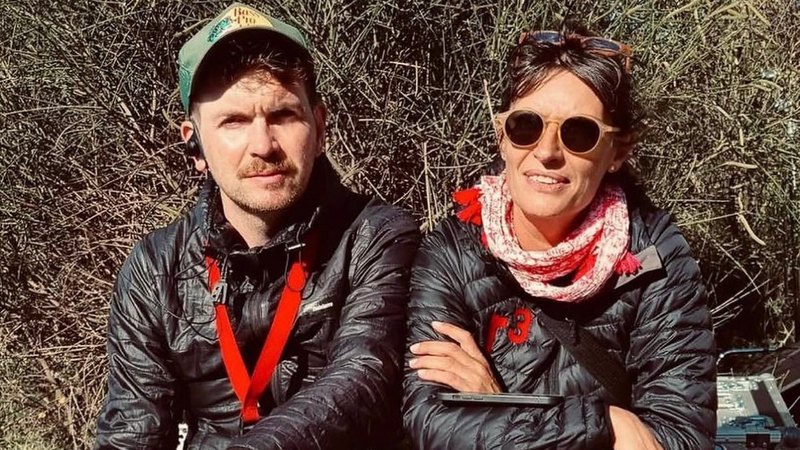
So Neil, we have to start with the Production Guild Awards 2026 – congratulations on winning the Assistant DirectorsAward, for your work as First AD on The Night Manager Series 2. What does that recognition mean to you by the Production Guild community?
I’m proud of winning the award because I’m proud of the job I did on The Night Manager, Series 2. It was an exhausting, complex and logistically challenging production and to have so many friends and colleagues in the Guild recognise that means a lot.
Can you tell us how you first got started in the industry, and what path led you to becoming a First Assistant Director?
Well, my first paid job was filming the Ice Hockey up in Sunderland when I was at university in the 90’s. I had two camcorders taped together, one wide, one tight. I was studying media production but not because I wanted to work in film. Coming from a small town outside of Hull, the film industry was unknown to me. I was studying media because I wanted a degree so I could go to Sandhurst. When I graduated, I wasn’t sure what I wanted to do but that changed as soon as I stepped onto my first film set. School for Seduction was shooting in Newcastle and a friend of mine said they were looking for runner drivers. I’d pick up the cast in the morning, drive them to base for hair and make-up, go to set all day and then when we wrapped and the cast were derigged, I’d drive them home. I believe I was paid £150 a week which I remember thinking was a fortune.
The path to becoming a 1st AD required a lot of luck and support.My first proper job after School for Seduction was as a runner on Biker Grove (a job I got because the minibus driver drank in the pub I worked in on the big market). It was a six-month contract, and it taught me so much.I did well enough that they asked me to come back the next season as a 3rd. After that I started working as a 3rd all over the North of England. Andrew Bainbridge became my regular 1st and we did all sorts together to the point where people thought we were father and son. I learnt so much from Andrew and he meant a lot to me. I didn’t 2nd for too long, less than a year all in, up in Glasgow and Liverpool. I’d been doing little jobs as a 1st on the side for years, short films and the odd commercial but at the tender age of 28 I did my first feature film. I am Nasrine, directed by the amazing Tina Gharavi, was shot in Newcastle for a budget of around two hundred grand and it was nominated for BAFTA.
Over the next four years I firsted 12 feature films in the North East, along with commercials, shorts and everything else. Then at 32, I met a man who would change my life. Jeremy Thomas took a chance on me, had faith in me and gave me an amazing opportunity. Dom Hemmingway, the film Jeremy was producing was not only shooting at Pinewood Studios, but also on location in London and the South of France. It was a huge step up and Jeremy not only supported me and look after me but after the film he promoted me leading to lunches with unbelievable directors like Peter Weir and Terry Gilliam. Jeremy was still putting my name forward for jobs as recently as last year.We talked at length on the phone about the project and when it looked like I wasn’t going to be able to do it he told me to swing by the office, because he hadn’t seen me for so long.Thank you Jeremy for everything you did for me, and I wish I’d come over for that cup of tea.
Your early credits include Starred Up and Film Stars Don’t Die in Liverpool – two very different British films, but both with a real intimacy and authenticity about them. What did those productions teach you – and is there one from your earlier career that stands out as particularly formative?
There were a few projects that were particularly formative.I am Nasrine and Dom Hemmingway were obviously big but it’s A Royal Night Out that stands out in my mind. I met fellow Production Guild member, Nick O’Hagan on Dom and along with Jeremy; he was an unbelievably supportive and still is to this day. Nick is one of if not the best producer I’ve worked with.We’ve done movies and TV shows together all over the world. France, Spain, Romania, Belgium, an abandoned leisure centre in Bangor and in my hometown of Hull where we shot A Royal Night Out, a feature set on V.E. day, 1945. It was an unbelievably ambitious project in every way possible.I could tell you a thousand stories, but I guess the best way to describe it is that if you watch the film, all the scenes in Trafalgar Square were shot in eight hours. One night between sunset and sunrise. What that film taught me above all else is that if you work with the right people, anything is possible.
This is a nice segway into Starred Up and FSDDIL. Two very different films directed by two amazing directors, David Mackenzie and Paul McGuigan. These films taught me that when you’re lucky enough to work with talented people do everything you can to support their vision. They taught me that at the end of the day my job is simple, I’m here to help make the best film possible. That may sound obvious but my favourite people to work with regardless of department or job title are people who first and foremost are filmmakers.
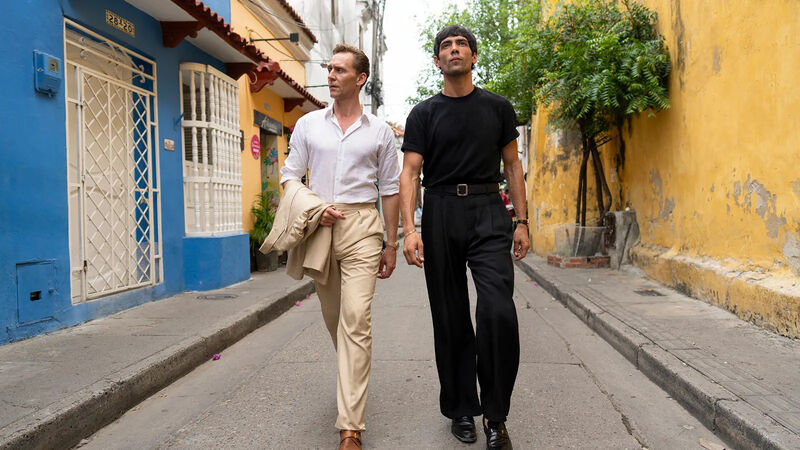
The Night Manager Series 2 was such a logistically complex production – a production that filmed simultaneously across the UK, Colombia and Spain with extraordinary logistical complexity; requiring coordination across multiple units and navigating four different tax credit systems. As First AD, you were responsible for keeping that enormous machine moving day to day. What did that experience demand of you – and what are you most proud of from that production?
It demanded everything I had, every ounce of my determination. I was also very lucky to be supported by some of the best. Matthew Patnick, Matt Spooner, Stephen Garrett, Georgi, Tim, all my AD’s form all three countries and so many other people. It was one of those jobs that no matter how tough it was or how little sleep I had I still enjoyed every minute because of the people. As I said, if you work with the right people, anything is possible.
What am I most proud of? I’m proud of all of it. We didn’t just complete what sometimes felt like an impossible scheduled we produced a fantastic show. Obviously, things are made easier with a great script, wonderful locations and a stellar cast but sometimes film making, which is essentially about deciding on your compromises can get overwhelmed by them. We fought so hard to not have that happen.
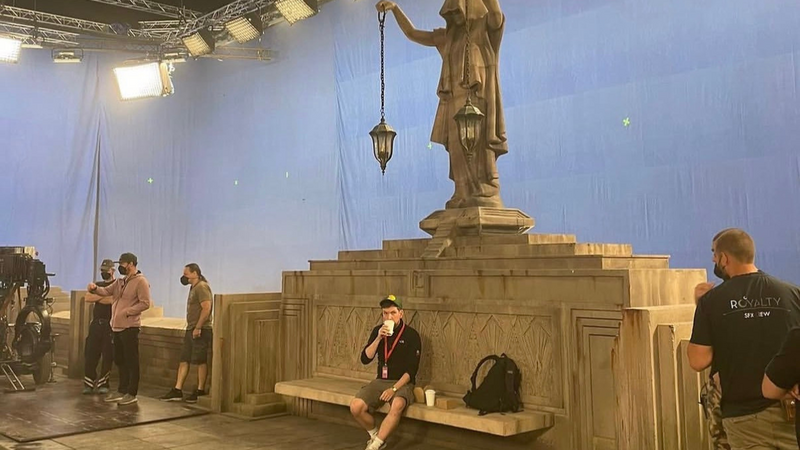
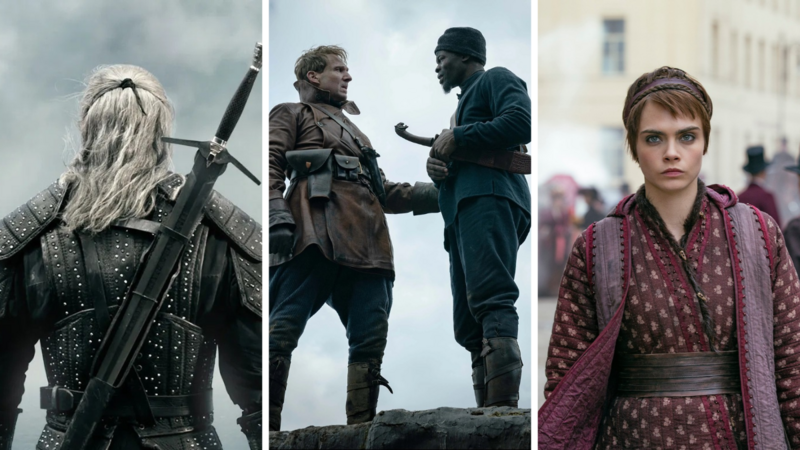
Your credits span an extraordinary range – from British dramas like The Children Act and See How They Run to major studio productions including The King’s Man, Carnival Row and The Witcher. How does your approach as First AD shift between those very different scales and environments?
Every production is different because for the most part the people are different. That affects my approach probably more than the scale, but that said, the scale obviously has an impact of the people you work with.
I tend to find on the larger productions that the prep is a lot harder, a lot more involved. On some big jobs, I can’t wait to start shooting so I can have a rest.It sounds obvious, but the larger projects are generally much more complex, and the more complex a project is, the more important prep becomes. Not to say that prep on smaller projects isn’t important, but on the larger ones it’s much more intense.
You’ve been a part of the Production Guild UK for over 10 years – what prompted that decision to join, and what value does membership continue to give you today?
The Production Guild was first mentioned to me by Nick O’Hagan. He was surprised I wasn’t a member already and recommended I join as soon as possible.At the time I was still finding my feet in the London industry, and the Guild was a great help.
Of all the things the Guild offered, for someone outside of London it gave me a wonderful sense of belonging. It’s hard to explain, from not knowing many people I suddenly felt like I had a community.
The First AD role sits at a unique intersection of creative and logistical authority – you’re the director’s right hand and the person responsible for keeping the entire production on schedule. How do you describe what the job really involves to people outside the industry – and what do you wish more people understood about it?
Blimey what a question. I always say the two most important skills you need as a 1st AD are people skills and problem solving. You also need a strong work ethic as there’s not much sitting down involved. I would probably best describe the job of a 1st AD as the greatest job on set that no one else on set wants to do.
Your upcoming credits include Foundation, Legacy of Spies and Birdwatcher – three productions that suggest your career continues to evolve in exciting directions. What draws you to new projects, and what does a script or production need to make you say yes?
Honestly, and I know I sound like a broken record, but it’s the people. I took all three of those jobs to work with certain people. Foundation was to work with Mark Taylor, Legacy of Spies was Matt Spooner and the Ink Factory gang, and Birdwatcher was Andy Goddard.
For better or for worse I also like a challenge. The more complicated the project the more excited I am to do it.
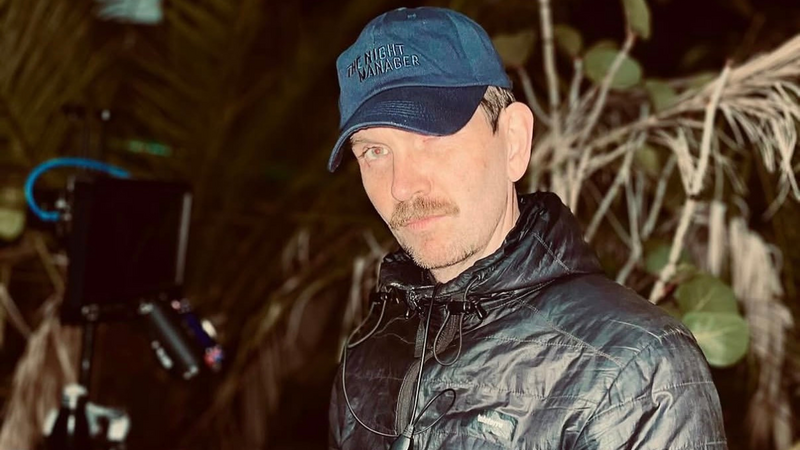
From the set of Starred Up to the multi-country world of The Night Manager, what is your absolute non-negotiable on a long shoot day?
Respect is the non-negotiable. Respect for me and for everyone else. Again, this comes down to working with good people. Decent coffee is also up there which is why I often find myself hanging out on the back of the grips truck.
And finally, what advice would you give to someone who wants to become a First AD, and what has kept you passionate about this work across such an impressive and varied career?
If you want to be a 1st AD you need to learn how to communicate with people. You’re what connects every department and you’re dealing with people on every step of the ladder. Hard work and good communication.
What keeps me passionate is an easy question to answer.I’m still passionate because I love the job. I love the job and I love the industry and I feel so lucky that I fell into it. I’ve travelled all over the world, had amazing experiences and met amazing people. What’s not to love?