You’ve built a career as a Production Co-ordinator across projects including Betrayal, Fountain of Youth, The Gorge and Obsession. How did you first get into the industry, and what drew you to production coordination?
I was always fascinated by film, television, photography, theatre, opera and art, so I knew from quite a young age that I wanted to work in a creative field.
When I was taking my A Levels – English Literature, Theatre Studies and Photography – I started thinking about how I could bring all those interests together. Film kept coming up as the obvious place for me. Having somewhat shelved the idea of becoming an actress, I went to Met Film School at Ealing Studios to do a Young Filmmakers' course one summer, which really cemented it for me. It brought together so many of my interests and made me realise this could be a career.
I went on to study for a BA in Media Arts at Royal Holloway, University of London, specialising in Producing for my practical work and Avant-Garde art for my theory. After graduating, and following many, many applications, I landed my first job as a Drama Runner at Tiger Aspect Productions.
I had some fantastic learning experiences there, and my then Head of Production, Frith Tiplady, was particularly influential. She helped me understand the different routes into producing and encouraged me to go into the Production Office, learn the tools of the trade and gradually work my way up, rather than trying to run before I could walk.
Production coordination has been a big part of that journey, and I've had a real rollercoaster of a time doing it! I've loved managing teams, bringing people together and working collaboratively to make things happen. It's incredibly hard work, but there's something very rewarding about seeing a project through from its earliest stages to the finished film and eventually getting to sit down and watch something you've helped bring to life with family, friends and colleagues.
Your credits span TV and film, working with Mammoth Screen, Skydance, Apple and Netflix productions. How does coordinating a series like Betrayal differ from a feature like The Gorge or Fountain of Youth?
They differ in quite a few ways, although the fundamentals of the role remain much the same.
On a large feature film, particularly one backed by an American studio, expectations can be incredibly high. The scale of the operation is ambitious, which is exciting but brings its own complexities. There are more layers of management, larger teams and considerably more moving parts to keep track of.
I spend a lot of time investing in my team and recruiting the right people to do the job – not just immediate people you know, but maybe considering new people outside of your network and building a bespoke and curated team that meets the specific demands of that specific job - which I think is a really important part of the job. When that comes to the immediate team you have got, that then means teaching, supporting and communicating openly, with trust, honesty and transparency. It's about making sure everyone has what they need to do their job, is working effectively and understanding the level of detail required.
Sometimes you have to operate on two levels simultaneously: being right in the detail and hands-on when needed, whilst also stepping back and maintaining a bird's-eye view.
On big feature films, it sometimes means arranging private charters to move cast and crew, or getting your head around complex underwater shoots and explosions, which can also be a lot of fun.
On smaller productions, particularly regional film and television, teams are generally leaner and you inevitably have to be much more hands-on. You're often picking up things that might sit with another team member on a larger production, so you need to be resourceful, adaptable and prepared to roll your sleeves up.
Having worked across both has been really valuable and suits my interest well. You learn to adapt to the scale, budget and demands of each production, but ultimately the fundamentals are the same: keeping people organised, communicating effectively, anticipating problems and making sure everyone has what they need to do their best work – and hopefully have some fun along the way!
What does a typical day look like for you as a Production Co-ordinator, and what would surprise people most about the role?
I think the beauty of working in production is that no two days are the same. Prep and shoot bring different demands, but there's always a huge variety to the work, and that's something I enjoy.
A typical day might start with opening up the office, looking at the prep calendar and getting an overview of what's happening. What meetings are taking place? Does everyone know where they need to be? Have they got the paperwork and information they need? Are there any access requirements or other practicalities we need to consider?
From there, it's a process of checking in with the team, liaising with departments, keeping on top of schedules and anticipating what might be coming around the corner, distributing and preparing documents. Contracts and memos. You're often thinking several steps ahead, whilst dealing with whatever has landed in your inbox that morning!
During prep, there's a lot of forward planning and putting the systems in place to make sure everything is ready for the shoot. Once you're shooting, the pace changes into a metronome-like rhythm and you're responding to the daily demands of the shoot, progress reporting and what is coming up next.
I think what might surprise people is just how varied the job is. You can spend the morning organising a meeting, the afternoon dealing with a travel problem and finish the day unpicking things that you previously meticulously organised and replanning.
You've worked on some big-scale productions with international elements. What have been the biggest challenges of keeping a production running smoothly behind the scenes?
A lot of it comes down to communication, time management and making sure the different teams are properly connected.
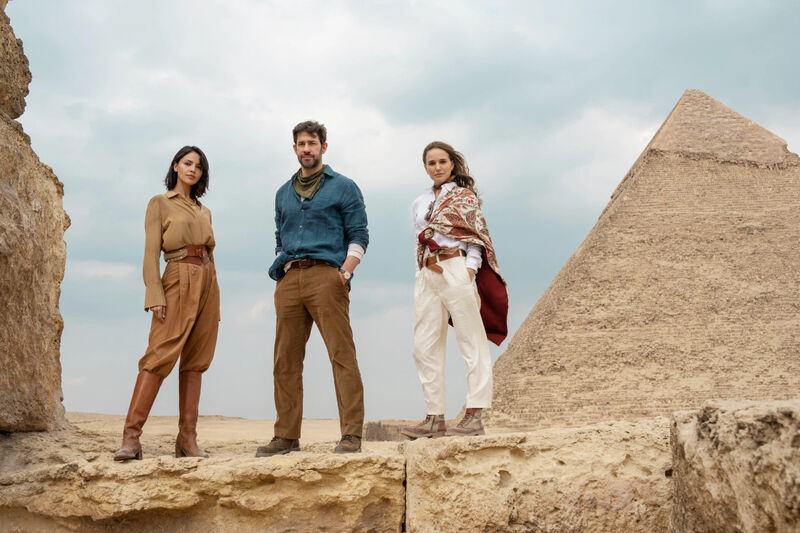
On Fountain of Youth, for example, I was working in London and juggling meetings with the team in Thailand in the morning and checking in with Austria and Egypt throughout the afternoon, popping to the backlot at Leavesden to check on the construction build and then catching up with the LA studio in the evening.
You're effectively operating across several time zones and different parts of the production simultaneously. Making sure the central team has a clear overview, whilst individual units have everything they need to keep moving – it is a real balancing act.
Ultimately, it comes down to the preparation, a lot of forward energy and having good systems in place. You need clear lines of communication, people who understand their responsibilities and processes that work for everyone. If you've put the groundwork in, people can operate confidently when things get busy.
Which project are you most proud of, and what made it so special?
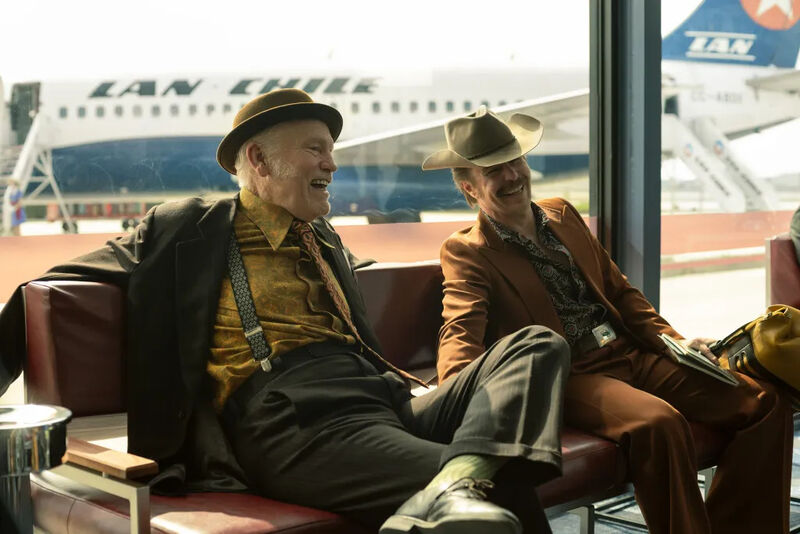
It's a difficult one, as I have been very lucky to work on some amazing projects, but I think it has to be my time as Shipping Coordinator on Martin McDonagh's Wild Horse Nine which has recently been released in cinemas.
I'm a huge admirer of his films, so it was a real privilege to be involved in the project. It was a fantastic working experience, collaborating with the teams at Blueprint Pictures in the UK and Fabula in Chile.
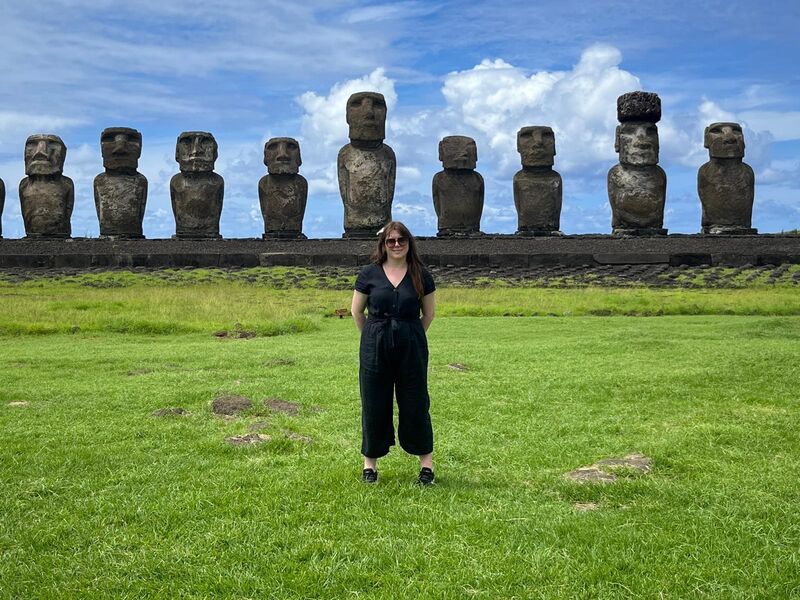
I was brought in to support the team at relatively short notice and ended up travelling out to Santiago and Easter Island, which was an extraordinary experience in itself.
The logistics were quite remarkable. We were shipping a volume of goods from Europe and mainland Chile out to Easter Island, which presents some pretty unique challenges given it’s the most remote inhabited island in the world. There was a tremendous amount to coordinate, and getting everything where it needed to be, when it needed to be there, required a huge collaborative effort across different countries, teams and cultures.
I was really proud to play a part in making that happen. It's one of those projects that reminds you just how much goes on behind the scenes to get a film made, and how many people and moving parts have to come together. It was also a lovely reminder that production can take you to some pretty extraordinary places! The end film is also pretty remarkable. I hope you get to see it if you haven’t already!
What skills or qualities do you think make a great Production Co-ordinator, and what advice would you give to someone starting out in the department?
Confidence, understanding, patience and communication. I think you need to be diplomatic and approachable, but also know when to stand your ground.
You have to be organised and methodical, but equally adaptable, because things rarely go exactly to plan. Being able to anticipate problems, think on your feet and find solutions without creating unnecessary panic is a big part of the job.
I'd also say never underestimate the importance of people skills. You're working with so many different personalities, departments and levels of seniority, and building good relationships makes an enormous difference. You need to be able to communicate with everyone, listen, support your team and create an environment where people feel comfortable asking questions.
For anyone starting out, I'd say be curious, ask questions and take every opportunity to learn. Don't be afraid to get stuck in, and remember that nobody knows everything and we should be learning our whole lives as our industry moves with a certain fluidity.
What made you decide to join the Production Guild, and what was it you hoped to gain from membership?
I think I was increasingly aware of the value of having a professional network beyond the immediate productions and people I was working with.
I'd heard about the Guild through colleagues and was interested in the training, opportunities to learn from more experienced people and the chance to connect with others working across the industry.
Having spent so much of my career moving between productions, I liked the idea of being part of something a little more permanent – a community that brings people together, shares knowledge and supports professional development beyond the life of any one production.
What value do you get from being a Guild Member, and which benefits, events or resources have made the biggest difference to you?
I've had the privilege of taking a Production Guild course in Movie Magic Budgeting and Scheduling with the legend that is Steve Clark-Hall, which was incredibly valuable both professionally and personally. He's also someone I've had the unique opportunity to work for.
Through Steve, and with the support of Georgette Turner, I began to understand that the Guild is much more than a badge of honour for your CV – although it certainly is that too! It offers a real sense of community, a space to share knowledge and experience, and an opportunity to connect with colleagues across the industry.
You can sometimes get quite absorbed in your own little ecosystem on a production, or the immediate network you already have. The Guild opens that up, introducing new people, perspectives and opportunities for growth, which really resonates with me.
I'm still a relatively new member, so I'm finding my feet and discovering everything it has to offer. I've recently been to the Manchester Super Connector Event, which was a great opportunity to meet new people and reconnect with old colleagues. I'm looking forward to getting more involved.
Where would you like to take your career next, and are there any areas of production you'd like to explore?
I'm a bit of a classic Gemini – I have eclectic interests and a naturally curious nature, so I don't necessarily expect my career trajectory to be particularly linear!
I've definitely found a home in the Production Office, which has given me a great grounding so far. I've recently had the opportunity to grow and step up into a Production Supervisor role on Legacy of Spies: A Spy Who Came In From The Cold, which I've really enjoyed.
Perhaps I'll continue along that path in Production to fulfil my longer-term aspiration of becoming a Producer, or perhaps I'll take a bit of a sidestep and explore something else for a while. I'm quite open to seeing what opportunities come along. Given that the Government keeps raising the pension age, I've got a fair few years of working life ahead of me! There's something quite exciting about not knowing exactly where your career might take you next, particularly in an industry that's constantly evolving.
Finally, what would you say to other crew thinking about joining the Guild?
Whenever I hear people struggling to find work, I often ask them, "Have you contacted everyone you know?" They say yes, sigh, and then I ask, "Well, have you contacted everyone you don't know?" Which is usually met with a slightly quizzical look!
But the truth is, there are always new people to meet, new things to learn and opportunities to develop your skills. The Guild helps nourish and build on all of that. It's about expanding your network, sharing knowledge and making connections you might not otherwise have made.
So maybe it is not really a question of whether you should join the Guild, but when!