You've worked your way up through the production office, from Production Assistant on Wonder Woman 1984 and The Witches, to Production Secretary on The Flash, and now to Production Co-ordinator for the Spain unit on upcoming The Beatles for Sony Pictures. How did you first get into the industry, and what was it about the production office that made you want to build a career there?
I got into the industry in a slightly unconventional way. I studied at the University of Hertfordshire and final year students were able to apply for a scholarship with Warner Brothers and after submitting an application, personal statement and having multiple interviews I ended up being awarded it in year group and this essentially meant I had a three month placement on a WB production which was Wonder Woman 1984.
I was then fortunate enough to move with the production coordinator from jobs to jobs. Early in my career I tried different routes. The production office, post sound and editorial. And for me production was the one that fully resonated with me, I like the fast-paced environment, problem solving and being the central point of contact for departments across the board.
Your early credits include some of the biggest studio productions around, including Mission Impossible: Dead Reckoning Part One, Venom: Let There Be Carnage and The Flash. What did those early years on large-scale productions teach you, and is there one that stands out as particularly formative?
I was very fortunate to be exposed to such large productions at a very early stage into my career, and when you’re working in the production office you start very early into pre production (soft prep) so you get to see the production take shape from such an early stage and you begin to understand how interconnected every department is and how decisions at that stage can have such big implications across a production.
Those early years also taught me to think beyond my immediate responsibilities, anticipate challenges and appreciate the value of clear communication. In an industry where the goalposts are constantly moving, being adaptable and resourceful is invaluable. I quickly learnt that identifying a problem is only half the job, the real value lies in being able to offer a solution.
From Production Assistant to Production Secretary, Assistant Production Co-ordinator and then Production Co-ordinator. How did you know when you were ready to take each step, and what advice would you give someone looking to make that progression?
There’s the element of self belief that has to come from within. You’re never going to know absolutely everything before stepping into a new role, and if you wait until you feel completely ready, you might find yourself waiting forever. Sometimes, you have to trust the experience you’ve accumulated, recognise how far you’ve come and take that leap.
Another part of my progression came down to having the right people around me. I’ve been incredibly fortunate to work with management teams who recognised my potential, invested in my development and, perhaps most importantly, instilled a sense of belief in me. Having people who genuinely value you and want to see you succeed makes all the difference. That was particularly true when I made the transition from assistant production coordinator to production coordinator.
My advice to anyone looking to make that progression would be to remain curious, take initiative and never become complacent in your learning. Take an interest in responsibilities beyond your own remit and try to understand not just what is being done, but why it’s being done. Surround yourself with people you can learn from, be receptive to constructive feedback and don’t be afraid to express your ambitions.
I’m a big believer in earning your stripes, but equally, don’t underestimate your own capabilities. Progression isn’t about having all the answers; it’s about having the confidence, willingness and attitude to find them.
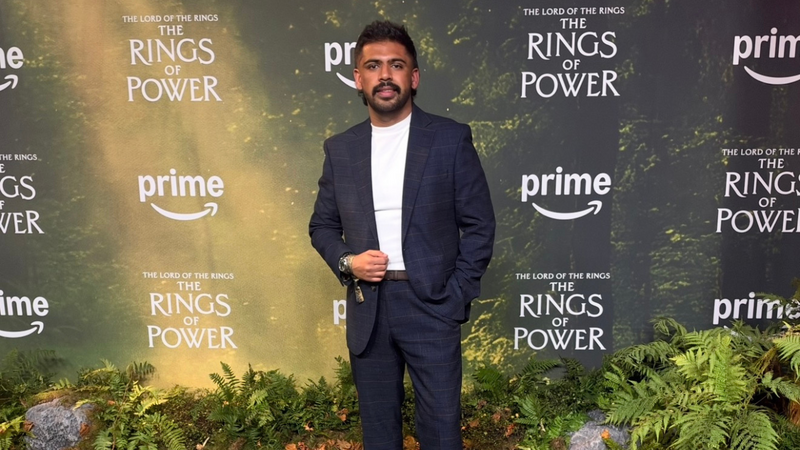
You worked on The Lord of the Rings: The Rings of Power across two seasons, first as Assistant Production Co-ordinator on Season 2 and then as Production Co-ordinator on Season 3. How did stepping up to Co-ordinator on a show you already knew change the way you approached the job, and what did the larger scale demand of you?
Having worked on the show previously (as an assistant production coordinator) was undoubtedly an advantage when stepping up to production coordinator on Season 3. I already had an understanding of the established workflows and the relationships across departments, which gave me a strong foundation to build on.
The transition to coordinator, however, meant looking at the production through a different lens. I became far more involved in the wider logistics, decision making and problem solving, whilst also taking on the responsibility of managing and developing my own team within the production office.
One of the biggest shifts for me was learning to balance my own responsibilities with those of the team. Having come through the ranks myself, I was conscious of creating an environment where people felt supported, trusted and encouraged to take ownership of their work. Much like the opportunities I was afforded earlier in my career, I wanted to give others the space to develop and grow in their respective roles.
Your credits include Wake Up Dead Man: A Knives Out Mystery for Netflix, as well as huge franchise productions. How does your approach as a Co-ordinator shift between a tightly run feature like that and a long-running series such as The Rings of Power?
They’re two very different experiences. With high end tv (HETV) shows, you often shoot in blocks, so whilst you’re shooting one set of episodes, you’re already prepping for the next. Essentially, you’re in production and pre-production simultaneously, which is an experience in itself. You’re also generally shooting for a much longer period of time, given the sheer volume of content being produced.
Your latest credit is The Beatles for Sony Pictures, which is among the highest-profile projects of the year. What was it like to be part of a production of that profile, and what are you most proud of from your time on it?
This was a very special project to be a part of. I had the privilege of coordinating the Spain Unit, and whilst there’s not much I can say about the production itself, the whole experience was quite surreal. It was my first role coordinating a unit based entirely overseas, which brought a whole new set of challenges and learning opportunities, from navigating international logistics to adapting to different ways of working.
Everything we shot was incredible, and I feel very fortunate to have been part of a project of that calibre.
You joined the Production Guild at some point in your career. What prompted that decision, and what value does membership continue to give you today?
Joining the Production Guild was something I’d always wanted to do, having heard so many positive things about it throughout my career. Once I stepped up to production coordinator, it felt like the right time to join. It’s already proven incredibly valuable, particularly in sourcing industry contacts and supplier information, and it’s great to be part of a wider production community.
The Production Co-ordinator role is often described as the glue holding the production office together. How would you describe what the job involves to people outside the industry, and what do you wish more people understood about it?
I’d describe the Production coordinator as the link between production management and the wider crew. On a feature film or HETV production, you’re working across all departments to ensure they’re supported and have everything they need to carry out their jobs effectively. From coordinating logistics and crew requirements to communicating key information and managing the production office team, it’s an incredibly varied role.
What I wish more people understood is how proactive the role requires you to be. It’s not just about finding solutions to problems as they arise, but anticipating potential challenges before they become an issue. You’re constantly thinking several steps ahead, balancing competing priorities and adapting to the ever changing demands of a production.
On a lighter note, what is your absolute non-negotiable in the production office on a busy day?
A fully stocked snack drawer, a reliable printer that doesn’t jam and if there’s a table tennis table nearby a competitive game of table tennis! Haha
Finally, what advice would you give to someone starting out as a Production Assistant who wants to become a Production Co-ordinator, and where would you like to take your own career next?
My advice would be to make the most of the position you’re in rather than constantly focusing on the next one. Take an interest in what’s happening beyond your own responsibilities, understand why things are done a certain way and put yourself forward for tasks that challenge you.
Some of the most valuable lessons come from simply observing how experienced people around you navigate difficult situations. Every role in the production office lays the foundations for the next, so embrace each stage of the journey.