Bad Blood for World Productions is your most recent credit as Line Producer. How does it feel to be part of it, and what drew you to the project?
I’ve always enjoyed watching shows produced by World Productions and have been in touch on annual basis with Elizabeth Binns, Head of Production in the hope that I might be considered for one of their projects. This year the stars aligned, and Liz passed on my cv to the Producer of Bad Blood which is a 4 part drama being produced for ITV. I knew of the subject matter which was based on the infected blood scandal which took place in the 80’s and 90’s in the UK. The story like Mr Bates vs Post Office is an incredibly important story to tell and convey to a wider audience. As a project for myself it was something different to what I had worked on previously. The subject matter and that it was being produced by World Productions, made it a very easy decision. Sadly, I couldn’t complete the shoot due to personal reasons however, I am incredibly proud to have been part of the team delivering the project, and grateful for the support I received from all my colleagues on the Production.
Can you tell us how you first got started in the industry, and what path led you to becoming a Line Producer?
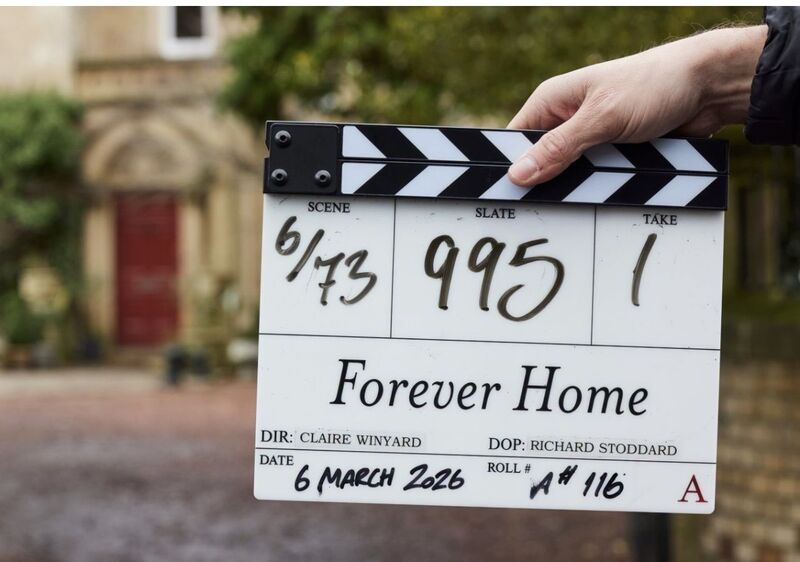
I started at MTV Networks Europe in London as PA to the SVP of Business Affairs back in 2000. After a couple of years there I decided that I wanted to move back home to the north east, as up to then I had been in London for over 6 years and its common for the majority of people who hail from the north east to eventually make their way back to the homeland! I wasn’t necessarily going to continue in the industry; however, I noticed an article in Broadcast magazine which was about a new production company opening in Newcastle called Liberty Bell Productions. The Production company was being set up by Andrea Wonfor and Stuart Prebble, both respected Producers in the industry. I found out the address of the offices and decided to put pen to paper (quite literally) and wrote to them to ask if they needed anyone to run the office. The next thing I knew, I had an interview in London and a few weeks later I started at Liberty Bell as Office Manager. Liberty Bell Productions had been set up to produce both Scripted and Unscripted, which reflected the background of its founders Andrea and Stuart. Sadly, Andrea passed away within the first 2 years of the company opening but Stuart carried on and kept faith with the team in Newcastle. I spent 5 years there working my way up from Office Manager to Senior Production Manager, working on a range of shows from Victoria Wood’s Big Fat Documentary (BBC One) to the Grumpy Old Women Series for BBC 2. The experience I gained whilst working there was invaluable and pretty much set me up for the rest of my career. When working at a small indie there would be times when you’d be changing a light bulb to then drafting budgets for multiple unscripted shows, to collecting a bag of Betacam Tapes (Rushes) from somewhere in the country to bring back on the train back to the Post Production house in Newcastle. I loved working in unscripted, however I always wanted to work on productions which were bigger in scale, so left Liberty Bell to pursue a transition into Scripted. It wasn’t a straightforward journey. In fact, in took 10 years to get to the position of Line Producer. Along the way I was given the opportunity by Sally Carroll, Production Executive to join CBeebies as Production Manager when they first arrived at MediaCity, Salford. Prior to this, I had a call from the then CEO of regional screen agency Northern Film and Media, Tom Harvey who asked whether I fancied joining them to help to set up and run a TV Production fund as Creative Services Manager. When I eventually got my first break in Scripted from Will Nicholson who was LP during that time, I found myself having to take a couple steps down and started as Production Secretary on German Co-Pro TV Drama – The Other Child. That however, kick started my transition into Scripted TV and along the way I was fortunate enough to work with some brilliant people who had faith in me and employed me on their shows including, Howard Ella LP on The Paradise (S2) for BBC One, Mary Owen, LP on Harriet’s Army (CBBC), and then back working with Will for Beowulf (ITV) and Vera (series 7 and 8) as Production Coordinator. After the end of Vera Series 8, I was summoned in for a meeting with the then Head of Production, Scripted, Gail Kennett, who proceeded to tell me that both she and everyone else thought it was time for me to step up to LP on Vera Series 9. I of course, was the only person who hadn’t contemplated that I would be stepping up to LP on a show on the scale of Vera. Luckily not only did I have the support from Will who had stepped up to Producer, but we were also fortunate to work with Chris Leach, as our Production Executive for that series, Chris not only has a wealth of knowledge and experience in Production but is probably one of the most patient and supportive people in the industry taking my daily calls throughout that series. I worked on Vera as LP from Series 9 to Series 12 and then prior to Series 13, our then Production Executive Jay Parsons called and let me know that as Will was now Executive Producer, the plan was for me to step up to Co-Producer. There is a common theme running here that my colleagues obviously had more faith and trust in me then I did myself. But I am very grateful that they did. In between working on Vera, I also worked on BBC comedy show The Power of Parker (Pilot and Series 2) with Gill Isles, Producer and Chrissie Broadway – Production Exec, and most recently Channel 5 drama Forever Home produced by FilmNation Entertainment and The MediaPro Studios, and Bad Blood (World Productions/ITV).
You’ve spoken about working with fellow Guild member, Will Nicholson, who mentored you as a Production Coordinator when you were beginning to step up. What did that mentorship look like in practice, and what did it do for your confidence and your career?
I first worked as Production Coordinator with Will (as LP) on Beowulf – Return to Shieldlands which was a 13 part period drama series for ITV back in 2014. This was my second production working as Production Coordinator. I had initially stepped up to the role on a CBBC drama called Harriet’s Army. Beowulf was and still is to this day probably the most challenging production I’ve worked on. The scale of the show was big and location wise, the show was set across different sites throughout the north east of England. As it was a period drama, it was also set in rural locations and we had a fairly big cast. From start to finish we were on the show over 18 months, so I worked with Will on the set up of the production during pre-prep which involved a significant amount of construction for the set build of the interior studios and also the building of “Herot” the village in a quarry in County Durham. Back then it wasn’t common for the Production Manager role to exist within the Production office team. So, the Production Coordinator role carried a lot more responsibility and tasks, which these days are split with the PM role. The way Will mentors is to give you a lot of space to work on your own initiative, whilst he gradually passes on additional tasks/responsibilities. I was able to take on any additional tasks but always knew that if I had any questions or concerns, I could always check in with him. There is never any judgement from him when mistakes happen, and he is always there to offer advice on solutions. Communication, honesty and trust are key to any good working relationship, and it helps that professionally we are on the same wavelength and have the same work ethic. The most important aspect for me is that I know that I always have his support if dealing with any difficult situations when working on a production especially now in my role as LP. Both Producer and LP roles can be quite isolating from the rest of the production crew due to the level of responsibility the roles carry, and it’s important for both roles to be supportive of each other to help the production run smoothly. His mentorship has carried on through the different productions we have both worked on, especially whilst I stepped up to Line Producer and then Co-Producer on the final two series of Vera.
You worked on Vera across eight consecutive series, from Series 7 through to Series 14. That’s a rare run on a long-running drama. What does it take to keep a production like that running smoothly year after year, and what did you learn from being part of a show with such a loyal audience?
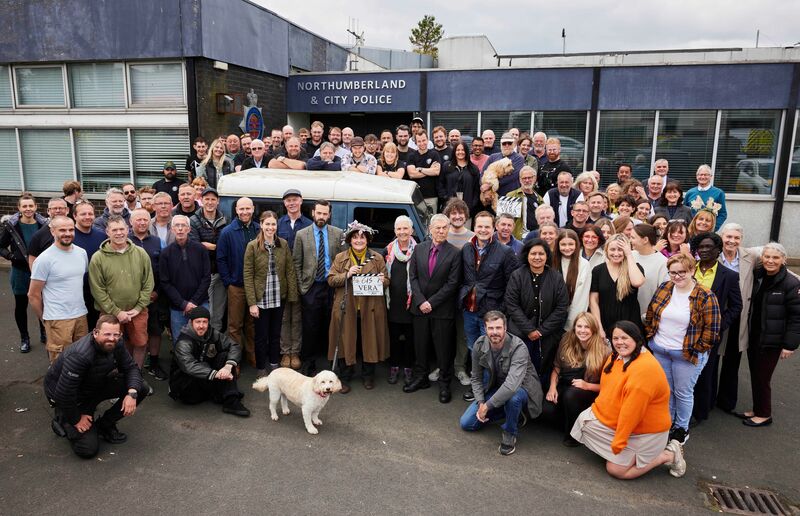
There was a common opinion amongst many in the industry, who hadn’t worked on the show that “Vera runs itself”. However, this opinion soon changed once crew joined the show and experienced the scale of location-based filming across a whole region, sometimes even crossing borders either north or south! We were shooting on average 4 x 120-minute feature length dramas over 20 weeks in weather which covered all seasons, sometimes in just one day!
I’m a firm believer that for a production to run smoothly, it needs the Producers and Production Management team to “set the tone’ right from the start. It’s our responsibility, to ensure that all cast and crew who are joining know that we are all working towards the same end goal and that we will always be approachable, supportive and work through any challenges together. We do sometimes need to make decisions which may not be popular within the wider crew. However, I’ve found that being honest with colleagues and explaining to them the reasons as to why certain decisions are made helps everyone feel part of the process. Also, it takes a whole team to produce a show, and we work with colleagues who have a variety of skills and knowledge. We should utilise the skills and knowledge of our colleagues to benefit the Production. I’ve been fortunate over the last few years to work with Producers Will Nicholson (Vera, Forever Home) and Gill Isles (The Power of Parker), who have led on this way of running productions.
We had a wonderful cast on Vera lead by the amazing Brenda Blethyn, however, the other star of the show were the wonderful locations in the northeast England, and the continuing success of the series was due to us being able to showcase the wide ranging locations across the region. As the series is based on the characters from the books written by Ann Cleeves we also try to stay true to that landscape which is what draws loyalty from the viewers.
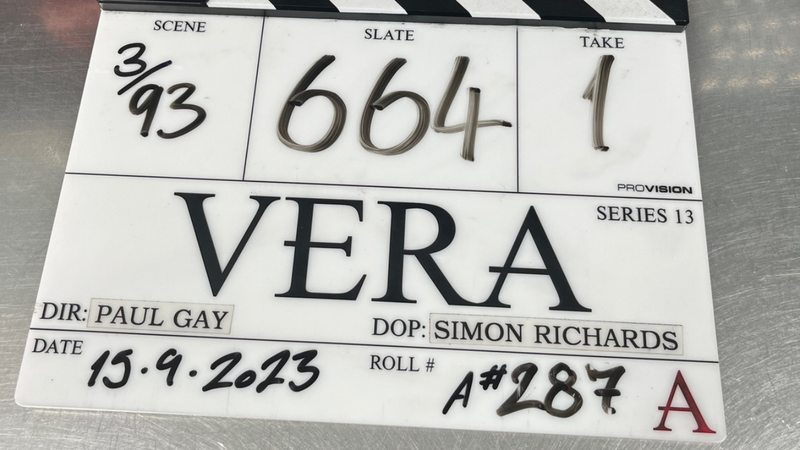
You started on Vera as Production Coordinator and then moved up to Line Producer and finally Co-Producer for Series 13 and 14. What changed in your role and your relationship with the production when you made that step, and what surprised you about it?
It’s quite a big jump from Production Coordinator to Line Producer. As there is now a Production Manager role between the two roles on most shows, this would likely be less likely to happen these days. I don’t think I was surprised by much of what I experienced when I stepped up as I had always had a very good relationship with all the LP’s I had worked with and saw pretty much first hand how they worked on a day to day basis. The biggest change is of course the responsibility you take on as Line Producer for the whole production. The LP is there to support the Producer and help manage and facilitate operationally the production of the show. I was now able to make decisions in consultation with the Producer and our Production Exec on which suppliers we should be using and which crew we should be booking, working closely with the Production Accountant to manage budgets, analysing Shooting Schedules and having an input into how they impact financially and logistically. There was also the responsibility of maintaining and managing the health and safety aspects within the production. As a Production Coordinator, I would supervise the team in the Production office and support both the Producer and the LP and take instruction from them on various aspects of the production. My responsibilities were more administrative, rather than managerial.
The biggest change I think was my relationship with the crew and how they saw me. I was changing roles within the same production and therefore I think not only did I have to get used to the change and taking on the responsibilities, but the crew also had to change the way they would interact with me. To be honest, for the returning crew I already had built a relationship with and there was a mutual respect there. The most challenging thing I found was to gain the respect of the senior crew coming into the show such as Directors, DOP and HOD’s. I would think that for the first year there was a large amount of imposter syndrome being felt. This is when the support I had from Will (Producer) and Chris (Production Executive), and colleagues from within ITV Studios, was key to helping to build my confidence and mindset to if I’m just myself and put the graft in, that’s more than enough to show that I can do the job.
You live in the North East, and Vera spent years filming across the region. What does shooting in the North East offer a production in terms of crew, locations and community, and what would you say to producers considering it for their next project?
There is a versatility that this region offers that makes it stand out. Within a small radius we have urban, countryside and coastal locations. We have a variety of architecture which cater for both period and contemporary landscapes. With regards crew, there is a real “can-do” approach with a wealth of talent and expertise in their fields. They are also very welcoming to colleagues coming to the region for the first time. It’s great to hear positive feedback from HOD’s coming in from outside of the region that they would gladly return and work with same crew again. Scripted productions which have filmed in the region, including Vera, George Gently, United, The Paradise, Beowulf, The Return to Shieldlands, The Dumping Ground, I Fought the Law, Forever Home, Smoggie Queens, The Secret Diary of Adrian Mole and Bad Blood over the years have proved that the north east as a region can deliver productions to the highest calibre. We also have the support of our regional screen agency North East Screen who have worked tirelessly over the years to promote the region and to encourage productions to shoot their shows here. Of course, having a Production fund helps in times of decreasing budgets, however the talent, locations and facilities we have in this region and the support we have from North East Screen go hand in hand and that is now showing in the number of productions which are looking to film in the area.
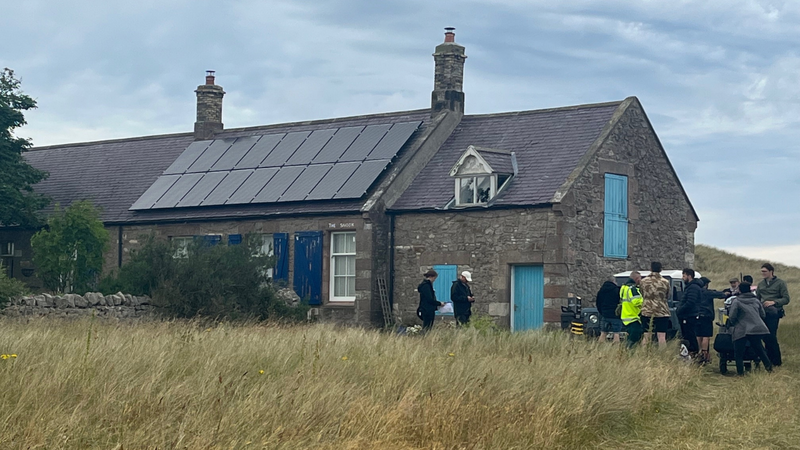
You’ve moved between returning series like Vera and newer projects like Forever Home and Bad Blood. How does your approach as Line Producer shift between a show you know inside out and a production starting from scratch?
I don’t really change my approach. I’m pretty much an open book and if I am working with new Producers, or HOD’s I like to ensure that they know that I am approachable and will make the effort to gain their respect, which also means being adaptable to the way they work. When setting up a new show, it’s always important to ensure that you are working with crew, suppliers who are committed to the project. Although Vera was a returning series, there would always be new challenges every year to ensure that the show’s content was fresh. so, I would always start each year as if I was working on a new show. There would always be a mix of new and returning team members each year, so for me whether it’s a returning series, I’ve been part of or a setting up a brand new show, my approach is always pretty much the same.
You’re a member of the Production Guild community. What has membership meant to you, and what would you say to someone thinking about joining?
I’d been thinking about joining the Production Guild for a few years, since I stepped up to Line Producer, as it’s always been synonymous with being a community of experienced industry professionals. It’s great to see the Guild now evolving and growing its membership to be more diverse across the regions with its networking events. It’s also encouraging to see that we as members have a say in how the organisation develops and there are opportunities to feedback to colleagues who work at the Guild. I would say to anyone thinking of joining that it’s worth it if you would like access to a community of industry professionals, networking opportunities and training events. It is a good option to help with your professional development.
On a lighter note, after years on location-heavy productions, what is your absolute non-negotiable on a long shoot day?
The first cup of coffee in the morning, and for the days when there is a long journey home after wrap, a bottle of Lucozade (original flavour) and a big packet of Hula Hoop crisps (Ready Salted).
Finally, what advice would you give to someone with their sights set on becoming a Line Producer, and what has kept you passionate about this work across such a varied career?
I’m often asked what drives me to work in my role as its not directly involved in the creative process. I always answer that for me a successful production is that it’s on schedule, on budget and that everyone is safe. But elaborating on that, I would say that through the years it’s been the people I have worked with, some of which I would consider as friends. For the most part I have worked with incredibly talented, supportive and most importantly decent people and that’s what makes it worthwhile. Also, for me watching and being able to help with the development of team members has been the most rewarding part of my job. Being part of a team which goes on to make wonderful productions enjoyed by a wide audience is always the bonus!
To anyone looking to becoming a Line Producer, I would say first and foremost the title and credit are not the most important part of the job. Accepting and taking on the responsibilities of the role and how you contribute to making a successful production carries the most importance. If you enjoy, leading, developing, supporting, problem solving and being part of a team then I would say the role of Line Producer is the right job for you.